
Abstract:
Background: Cancer remains a challenging multifactorial disease, driving the search for more secure, multi-targeted drugs to circumvent the limitations of conventional treatments. This study applied an integrated in-silico strategy to evaluate the anticancer potential of chitosan and create novel quercetin alkoxy derivatives with enhanced features.
Methodology: Molecular docking on four significant cancer targets (MELK (breast cancer), Beta-glucuronidase (colon cancer), XPD helicase (skin cancer), and CHP (ovarian cancer), was conducted using AutoDock Vina. Twenty virtual quercetin derivatives were created by introducing methoxy, ethoxy, propoxy, and butoxy groups at five positions on its structure. Toxicity prediction and drug-likeness prediction were performed using ProTox-II and SwissADME, respectively.
Results: The results revealed chitosan possesses high binding affinity, particularly for Beta-glucuronidase of colon cancer (-8.7 kcal/mol). Quercetin also exhibited significant binding, most prominently to the skin cancer target (-8.7 kcal/mol). Importantly, alkoxy modification enhanced quercetin's binding ability. The butoxy derivative at position 3 (OC?H?-P3) exhibited the best predicted affinity for colon cancer (-9.2 kcal/mol), indicating improved target interaction. Computational docking revealed that quercetin potently inhibits the target enzymes by establishing several hydrogen bonds and non-polar contacts within their catalytic pockets. While all analogs synthesized adhered to Lipinski's Rule of Five, suggesting probable oral absorption, toxicity prediction revealed possible mutagenic and immunogenic properties in some methoxy and butoxy derivatives, directing selection toward less toxic ethoxy and propoxy analogs like OC?H?-P12.
Conclusion: The study demonstrates that chitosan and quercetin are both potential multi-targeted anticancer drug candidates. In-silico design identified quercetin alkoxy derivatives, such as OC?H?-P3 and OC?H?-P12, as improved lead compounds with better predicted binding affinities, good drug-likeness, and acceptable toxicity profiles. The results provide a solid rational foundation for further synthesis and experimental validation of these novel compounds as anticancer drugs.
Keywords: Molecular Docking, Drug Discovery, Quercetin, Chitosan, Cancer, Precision Oncology
Biography:
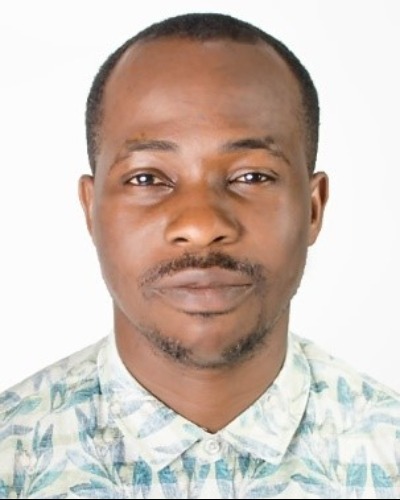
Mr. Godwin Offumobi Ogar is a PhD Candidate in Cell and Molecular Biology at the University of Lagos, Nigeria, and a Molecular Laboratory Scientist at Evercare Hospital Lekki. He holds an M.Sc. in Cell and Molecular Biology from the University of Lagos and a B.Sc. in Genetics and Biotechnology from the University of Calabar. His research interests encompass cancer biology, drug delivery, nanomedicine, and computational drug discovery. Mr. Ogar has published extensively on anticancer agents and molecular diagnostics, and serves as a graduate member of several international professional bodies including the American Association of Cancer Research (AACR) and the European Society for Molecular Oncology (ESMO). He has received advanced training in genomics and next-generation sequencing from Bio-Rad Laboratories and the World Health Organization. His current research focuses on chitosan-based drug delivery systems for targeted cancer therapy.
© 2026 Mathews International LLC. All rights reserved.
