
Department of Public Health of Rimini, Italy
Title : Iodine and Caesium-137: Angels and demons of evolutionary biology, in pancreatic cancer and diabetes
Abstract:
The Chernobyl nuclear accident, on 1986, marked a turning point in both the history of energy production and our understanding of the relationship between human technology and life. J.R. Oppenheimer evoked the famous Hindu scripture, “Now I am become Death, the destroyer of worlds”, reflecting the profound realisation that nuclear fission represents a significant departure from the natural history of matter. Life evolved within a stable isotopic environment shaped by cosmic nucleosynthesis and long-term biological selection. Iodine was progressively integrated into biochemical pathways, including antioxidant and regulatory mechanisms. However, nuclear fission has introduced an anthropogenic production of radioactive isotopes that were absent from evolution. This evolutionary integration of iodine and potassium into living systems has provided robust mechanisms for antioxidant defense, redox regulation and metabolic stability. Artificial radionuclides, such as iodine-131 and cesium-137, mimic these essential elements but differ in radiophysical properties, exploiting conserved transport pathways and creating cellular vulnerabilities. But the total correct amount of iodine (I) in the human body is still controversial and only thyroidal iodine content has been estimated of 5-15 mg. WHO hypothetized the total content to be only 15-20 mg, with 70–80% in the thyroid and 20–30% in extrathyroidal tissues. Recently Venturi calculating the amount of Iodine, with the help of AI, reported different values about 30% in the thyroid and 70% in extrathyroidal tissues. Artificial radionuclides interfere with cellular signaling and cause significant genetic and metabolic disorders, including pancreatic cancer and diabetes. According to an agreement of 1959, WHO cannot publish on nuclear radiation without consulting the IAEA and loses scientific autonomy in radiation protection and seems more conservative towards industry. 'Food Standards’ of Cesium-137, one of the most dangerous and persistent (more than 300 years), after the disaster of Chernobyl and Fukushima, is now revised downward.
Biography:
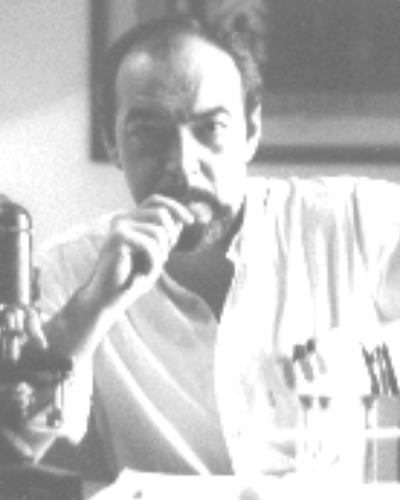
Sebastiano Venturi, studied Iodine and iodine deficiency disorders and the extrathyroidal antioxidant action of iodine in human organisms. He reported the first articles on the association of iodine and stomach, breast and salivary glands cancer, presented in Beijing and London Congresses. He also published the first study on the evolutionary aspect of iodine in primitive living cells. In 2020-25 he studied the first correlation on Cesium-137 and its correlation on Pancreatic and Salivary Cancers, Pancreatitis & Diabetes that reported at St. Petersburg (2022) and Singapore (2025) International Congresses, through also an experimental form with Artificial Intelligence (A.I.)
© 2026 Mathews International LLC. All rights reserved.
