
Abstract:
Background: In the era of personalized medicine, advancements in breast reconstruction methods have provided women with precise treatment options that are both secure and aesthetically preferable. The explicit merits of oncoplastic breast surgery (OBS) over conventional breast conservative surgery are that the former aims to preserve the natural breast by reshaping post-lumpectomy, allows larger tumor resection, preserves aesthetics, and symmetry with the implications of plastic surgery reconstruction methods. OBS comprises volume-replacement and volume-displacement methods. Volume replacement or flap reconstruction method imports additional tissue in the form of a flap, which strives to compensate for the loss of volume from surgical excision. Conversely, the volume displacement method rearranges the remaining breast tissue by glandular advancement or rotation to redistribute the parenchyma, thereby minimizing wide local excision. Both the reconstruction methods in women, pertaining to all breast sizes, can achieve aesthetic outcomes without compromising oncological resection. Furthermore, OBS is categorized as level 1 and level 2 on the basis of surgical resections. Level 1 OBS involves resection of at least 20 % of total breast volume, and volume displacement technique to achieve an acceptable cosmetic result. While level 2 OBS involves resection between 20 % and 50% of total breast volume, with restoration performed by either of the two aforementioned methods. Some of the level 2 OBS techniques include Wise pattern, Grisotti, Benelli, Round block, and vertical mammoplasty. Neoadjuvant therapy can also be administered in certain cases to reduce the tumor size prior to reconsideration for OBS. The paramount surgical decisions should be determined by the patient’s anatomy, tumor characteristics, personal preferences, and clinical presentation. Nevertheless, OBS should be presented as an option to all women requiring breast surgery. This article summarizes the patient-reported outcome measures (PROMs), cosmetic satisfaction, and functional outcomes following various oncoplastic breast surgery procedures in patients with breast cancer at our tertiary cancer centre.
Methods: This retrospective observational study included 100 consecutive patients undergoing oncoplastic breast surgery at a tertiary cancer centre between 2016 and 2026. Procedures performed included LICAP, MICAP, AICAP, Grisotti flap, round block technique, wise pattern therapeutic mammoplasty, vertical mammoplasty with matrix rotation, and latissimus dorsi (LD) flap reconstruction. PROMs were assessed using a structured questionnaire evaluating cosmetic satisfaction, breast symmetry, psychosocial well-being, physical well-being, and overall satisfaction. Postoperative complications, margin status, and need for re-excision were also analysed.
Results: A wide spectrum of volume displacement and volume replacement procedures were successfully performed with acceptable complication rates and oncological safety. Most patients reported good to excellent cosmetic satisfaction and improvement in body image and psychosocial confidence following surgery. Therapeutic mammoplasty and perforator flap-based procedures demonstrated favourable aesthetic outcomes with preservation of breast contour. Negative surgical margins were achieved in the majority of cases with low re-excision rates.
Conclusions: The surge in reconstructive procedures is shifting how patients make decisions on the basis of their diagnosis. Incorporation of PROMs with more objective clinical parameters will predict future patient’s choices, thereby leading to advancements in clinical care and management.
Biography:
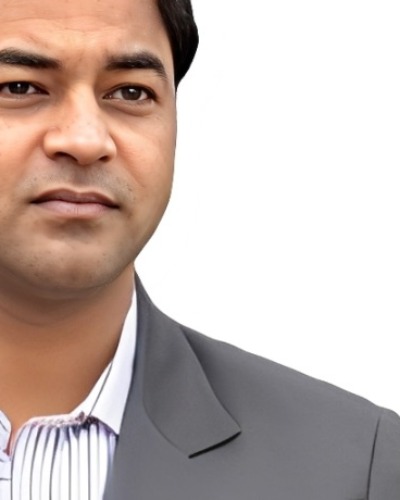
Prof. Parvinder Singh is a Surgical Oncologist, Prof. & Head, Department of Surgical Oncology at Advanced Cancer Institute. He has expertise in oncosurgical procedures, specializing in oncoplastic breast surgeries. He holds a MS (General Surgery) from PGIMS, Rohtak, and DNB (Surgical Oncology) from Nizam’s Institute of Medical Sciences. Prof. Singh has received numerous fellowship awards such as ASI-Ethicon travelling fellowship, Gem Hospital & Research Centre, Coimbatore. In addition, he gained expertise in oncoplastic breast surgery from University of East Anglia. He is currently the Director of Advanced Cancer Institute (BFUHS) at Bathinda, Punjab, India.
© 2026 Mathews International LLC. All rights reserved.
