
Institute of epidemiology, Military Medical Academy, Serbia
Title : Radosavljevic urinary screening biomarkers of the key chemical carcinogens for bladder cancer
Abstract:
The aim of the study was to examine the possibility of using the urinary concentration of 1-hydroxypyrene for screening high-risk male individuals for bladder cancer. Radosavljevi?′s urinary screening protocol for the key chemical carcinogens used. Numerical data were arithmetic mean with standard deviation or median with interquartile range, while categorical data shown as percentages. Two independent samples compared by Student t-test or Mann-Whitney U test, depending on the data distribution. Normality evaluated by Shapiro-Wilk test and box plots. The analysis performed in statistical software IBMSPSS ver. 29. This case-control study comprised 117 urinary bladder male cancer patients and 110 healthy male controls. The average age of patients was 67.86±9.94 years, while for controls was an average of 82.95±7.62 years. The mean urinary values of 1-hydroxypyrene at 1st measurement – in patients 205.0 pg/ml (IQR = 116.5-456.5) and in controls 136.5 pg/ml (IQR =76-374.5) with statistically higher values in urinary bladder male cancer patients than in controls (p = 0.020). At 2nd measurement – in patients 183.0 pg/ml (IQR = 141.8-407.3) and 137.0 pg/ml (IQR = 73-353.0) with statistically higher values in urinary bladder male cancer patients than in controls (p = 0.013). 1-Hydroxypyrene results were higher in bladder cancer patients group, but determination of 1-hydroxypyrene alone in urine is not sufficient for urinary screening of bladder cancer in men. We suggest that HPLC and ICP analysis urinary biomarkers from other chemical carcinogens incriminated as causes of bladder cancer, from Group 1 carcinogens according to IARC.
Keywords: Human Exposure; Chemical Carcinogens; Screening; Bladder Cancer.
Biography:
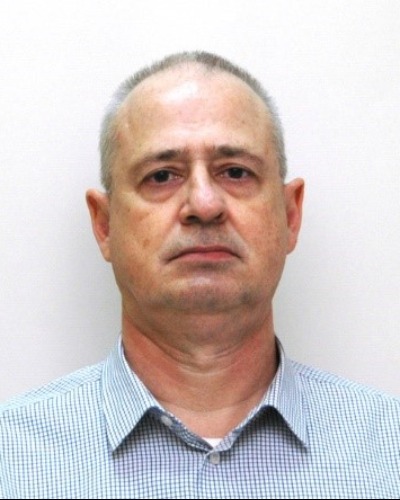
Vladan Radosavljeviс graduated from the Medical Faculty of the University of Belgrade, Serbia, in 1991. He specialized (May 1995) and received his doctorate (November 1999) in epidemiology at the Medical Faculty of the University of Belgrade. Dr. Radosavljeviс was the head of the Department of Epidemiology and deputy director of the Military Institute for Preventive Medicine in Belgrade from 2003 to 2010. He was the head of military preventive medicine from 2010 to 2020 in the Ministry of Defence of Serbia, and in 2020 he moved to the Institute of Epidemiology of the Military Medical Academy, Belgrade, where he works as an expert epidemiologist. He was a professor at the Biological Weapons course at the Military Academy of the University of Defence in Belgrade and a research associate at the Epidemiology course. Since 2015, Dr. Radosavljeviс is a United Nations expert on biological weapons within the mechanism of the United Nations Secretary General.
© 2026 Mathews International LLC. All rights reserved.
