
Abstract:
Background: The parathyroid gland is the smallest organ in the organism, with an important function of regulating blood calcium in the human body. The accidental resection of the parathyroid gland during thyroid surgery cannot be ignored, so attention should be paid to the identification of the parathyroid gland.
Methods:
1. Iron oxide nanoparticles were locally injected into the thyroid gland. Since iron oxide nanoparticles are black, they can stain the thyroid gland and lymph nodes black, while the parathyroid gland is not stained, thus achieving negative imaging of the parathyroid gland.
2. Antibody-coupled fluorescence technology was applied. A fluorescent probe was prepared by linking fluorescence to the calcium-sensing receptor, which was then injected intravenously. The parathyroid gland specifically expresses the calcium-sensing receptor; through antigen-antibody binding, the fluorescence is delivered to the parathyroid gland, realizing positive imaging of the parathyroid gland.
Results: Iron oxide nanoparticles could achieve negative imaging of the parathyroid gland in rat and New Zealand rabbit models with little surrounding contamination. In the rat model, positive imaging of the parathyroid gland was observed using the calcium-sensing receptor-linked fluorescence.
Conclusion: The negative and positive imaging technologies for the parathyroid gland play a role in identifying the parathyroid gland during thyroid surgery and are worthy of further clinical research.
Biography:
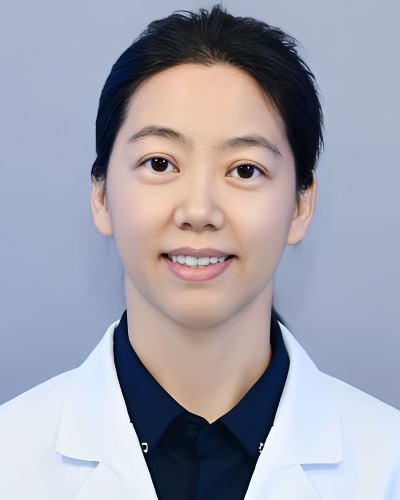
Zheng Weihui is a clinician specializing in thyroid surgery. She holds an MD and completed postdoctoral training. She works as a master’s supervisor and specially appointed associate researcher, is awarded Young Healthcare Talent of Zhejiang Province, and has been a visiting scholar at Singapore’s A*STAR. Her practice covers thyroid and parathyroid surgery. Committed to addressing real-world surgical challenges, her research focuses on intraoperative recurrent laryngeal nerve preservation and parathyroid identification. She performs open and endoscopic operations with cosmetic incisions to facilitate rapid recovery, and explores novel multidisciplinary therapies for advanced thyroid malignancies.
© 2026 Mathews International LLC. All rights reserved.
