
Department of Public Health of Rimini, Italy
Abstract:
In these times of danger of severe international conflicts with fear of the use of atomic weapons and accidents in nuclear power plants, radionuclide contamination in terrestrial ecosystems has nowadays reached a dangerous level. One of the most frequent and studied artificial radionuclide is cesium (137-Cs and 134-Cs), which is on the rise in the world. This orally ingested artificial radionuclide is a serious danger that can cause, in humans and animals, through inflammatory, carcinogenic, carcinogenic, necrotic mechanisms, functional deficiency as diabetes mellitus, cancer and congenital anomalies by DNA and mitochondrial damage. The Author reported autoradiographic and scintigraphic studies describing some, little-known, damage to organs of pancreas, salivary glands, colon, ovary and diabetes mellitus, whose incidence rate is gradually rising worldwide. But a controversy on tissues and organs damaged, by Low-Dose Radiations action, is frequently reported in medical literature.
Biography:
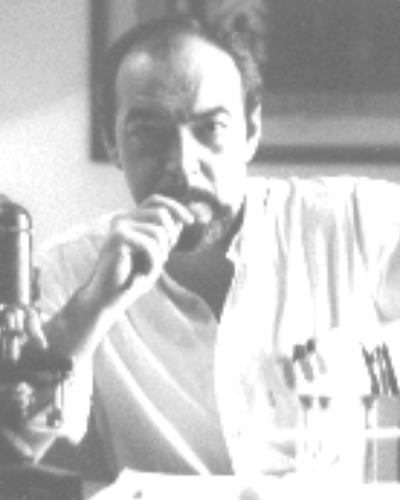
Sebastiano Venturi, studied Iodine and iodine deficiency disorders and the extrathyroidal antioxidant action of iodine in human organisms. He reported the first articles on the association of iodine and stomach, breast and salivary glands cancer, presented in Beijing and London Congresses. He also published the first study on the evolutionary aspect of iodine in primitive living cells. In 2020-25 he studied the first correlation on Cesium-137 and its correlation on Pancreatic and Salivary Cancers, Pancreatitis & Diabetes that reported at St. Petersburg (2022) and Singapore (2025) International Congresses, through also an experimental form with Artificial Intelligence (A.I.)
© 2026 Mathews International LLC. All rights reserved.
